Four parts connect the building to the response.
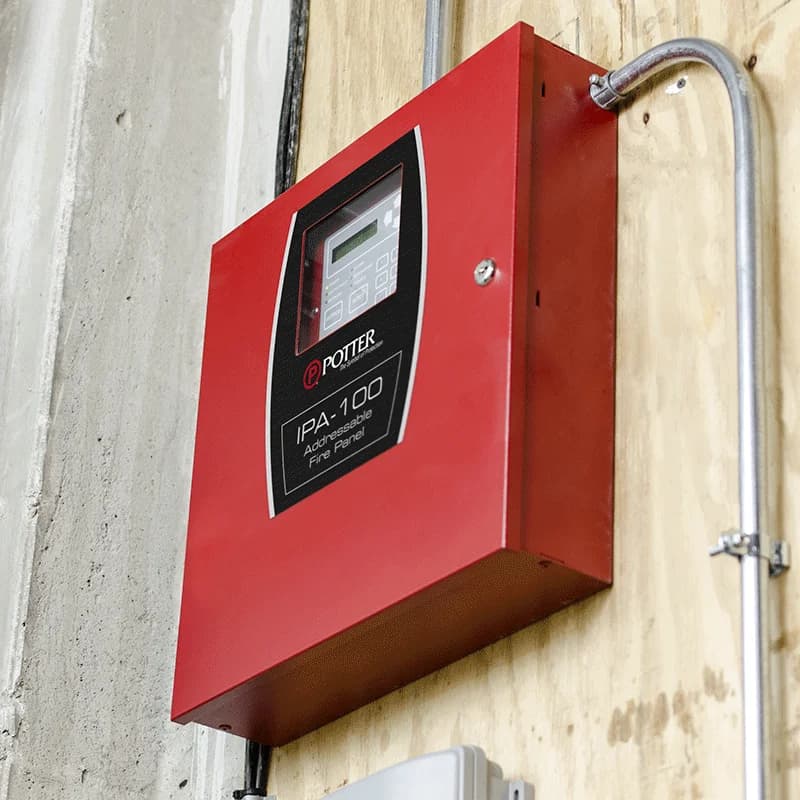
The fire panel receives events from the equipment in the building. A communicator sends those events over the configured connection to a supervising station. The station receives the event on the property's account and follows the applicable response instructions. Equipment, service, and account details all have to agree.
Ask who is responsible for each part. Your phone carrier may supply the line without servicing the alarm. An IT company may manage the network without managing the communicator. The monitoring company may receive signals while a local contractor maintains the panel. Write down the service contact for each responsibility.
That list helps when something changes. A router replacement, phone migration, or tenant move can affect the alarm connection even if nobody calls the work a fire alarm project. Let the alarm provider know before a dependent service changes.
- 1. Fire alarm panelReceives events from the building's devices
- 2. CommunicatorSends the event over the configured signaling path
- 3. Supervising stationReceives the signal on the property's account
- 4. Response procedureHandles the event using its signal type and account instructions
A simplified signal path. Equipment, communication methods, and response procedures depend on the installed system and account.
Alarm, supervisory, and trouble aren’t the same event.
An alarm signal comes from a fire-related initiating event. A supervisory signal identifies an off-normal monitored fire protection condition. A trouble signal identifies a system fault. The panel's programmed events and the account's response instructions determine how the station handles the actual report.
Fire-Lite's panel documentation describes separate alarm, supervisory, and trouble operation. It's a useful example of why a general alarm notification isn't a complete explanation of an account. Your installed panel and programming need their own review.
Ask the provider to walk through the events your system reports and the contacts assigned to them. Make sure the person receiving a trouble notice knows who can arrange service. Keep the building's emergency procedures in place; a monitoring account isn't a substitute for staff knowing what to do during a fire.
What it meansA fire-related initiating event, such as a detector or manual pull station activation.
Why the account mattersThe event needs the response procedure established for that property and signal.
What it meansAn off-normal condition in a monitored fire protection function, such as a monitored valve position.
Why the account mattersIdentify the affected function and the people responsible for investigating it.
What it meansA fault affecting the alarm system, such as a circuit, power, or communication problem.
Why the account mattersSomeone needs to receive the notice and arrange the appropriate service.
Find out what your fire alarm actually uses.
Start with the panel model and communicator. Ask the provider to identify the active signaling paths and confirm the account's recent received events. A keypad that appears normal and a telephone bill that says business line don't establish the whole path.
If a copper line is involved, match the line to the equipment before canceling it. Some buildings also have elevator phones, entry systems, fax equipment, or other services with separate requirements. The person reviewing the phone bill needs the equipment owner's input, not just a list of monthly charges.
Record the line or service identification, equipment served, responsible vendor, and any alternate path. If nobody can explain a charge, mark it for investigation. Don't use uncertainty as a reason to disconnect it and see what stops working.
- Panel and communicator make/model
- Monitoring provider and account identification
- Active signaling method or methods
- Any telephone numbers and the equipment each serves
- Last confirmed received test event and current trouble history
Copper, cellular, and IP have different dependencies.
An existing analog dialer may use telephone service, while a compatible communicator may support cellular or IP signaling. The names alone don't tell you whether an option is suitable. The panel, communicator listing, station support, and applicable requirements need to fit the proposed arrangement.
Cellular needs usable reception at the installed location and a supported service. IP depends on network access and the site's internet equipment. A replacement voice product might provide dial tone without being suitable for a particular fire alarm dialer. Have the exact product reviewed, including any required permits or authority approval.
Ask for a plain explanation of the proposed path: which equipment stays, which changes, what service it uses, and what happens when a dependency fails. Our fire alarm monitoring service includes reviewing those questions for an existing commercial system.
Copper / analog
Existing dialers may use telephone lines to report to the station.
Check the carrier product, active lines, panel requirements, and any retirement notice.
Cellular
A compatible communicator uses a supported cellular service.
Check equipment listing, station support, reception at the installation point, and backup power.
IP / internet
A compatible communicator sends signals over the site's network.
Check network access, internet availability, router/modem power, and communication supervision.
Look beyond the panel battery.
For an IP connection, identify the router, switch, modem or network terminal, internet service, and their power supplies. A panel battery doesn't automatically keep that equipment running. For cellular equipment, review its power arrangement and the local reception conditions.
Ask how a lost connection is supervised, how a fault is reported, and who receives the notice. Those details are configuration-specific. Don't read uninterrupted or instant in marketing copy as a substitute for the equipment and service requirements in the proposal.
Two communication paths can share a dependency. For example, equipment that shares a supply still needs its power arrangement reviewed. Ask the provider to explain the independence of the paths and the test procedure rather than assuming a second label on a diagram solves every outage scenario.
- Primary AC power to the panel and communicator
- Standby power and applicable battery requirements
- Network devices and their power, if the communicator uses IP
- Cellular service and reception at the equipment location
- Path supervision, fault notices, and the person responsible for service
Keep the old line until the replacement is working.
Plan the cutover before calling the carrier to cancel. Identify who authorizes the change, who configures the communicator, who coordinates station testing, and who confirms the old service can be retired. A carrier deadline should be shared with all of those people early.
Arrange the test window with the monitoring provider. The agreed procedure should verify the intended events arrive on the right account and that equipment and account status are understood after testing. Keep the test results with the building's alarm records.
Retire the old path only after the replacement is approved where required, installed, tested, and confirmed operational. Our copper phone line article covers carrier notices and the other alarm equipment that may be affected. A broad carrier transition target isn't your building's confirmed disconnection date.
Replace the connection. Verify the signals. Then retire the old service.
A listed station and a property certificate are different.
UL's fire alarm service certification program covers defined service arrangements. A monitoring station's listing doesn't automatically mean every property it monitors has a property-specific UL certificate. If an insurer or authority asks for one, identify the exact document and requirements before the service is arranged.
Ask which company is authorized to issue the certificate, what service it covers, and how the monitoring and local service responsibilities are organized. Keep the certificate and renewal information with the account records rather than relying on a general statement that the station is listed.
Bezemer uses a UL-listed central station relationship. If your property needs a certificate, raise that at the start so the arrangement can be confirmed. We don't describe every monitored account as a certificated property.
Switching providers? Check equipment access and account details.
Before a cutover, confirm who owns the communicator, who can program the panel, and which service agreement applies. An existing device may need reconfiguration or replacement. Find out before the new service start date and keep the existing arrangement active through the agreed transition.
Review the service address, building or suite identification, primary and backup contacts, and instructions for each event type. Give someone on the facility team responsibility for keeping the list current. A contact who left the company last year is a maintenance problem the next device test may not solve.
Compare total service costs: communicator hardware, installation or programming, recurring monitoring, equipment service, inspection/testing, and any required certificate work. Ask which costs are one-time and which recur. A monthly rate on its own doesn't describe the transition or ongoing responsibilities.
- Programming access and communicator ownership
- Existing contract terms and cancellation dates
- Property identification, contacts, and response instructions
- Account test procedure and recorded results
- Hardware, setup, monitoring, service, and certificate charges
Monitoring and inspection belong in the same records.
Monitoring records show what the station received. Physical testing and inspection records address the equipment at the property. Keep both so a technician can follow the chain from an initiating device through the panel and communicator to the station.
Our testing and inspection guide explains equipment checks, access, visit coordination, and report findings. Bezemer's fire work covers alarms, monitoring, testing, and inspection. Sprinklers and suppression systems need their own qualified contractor, including coordination where their functions interface with the alarm.
For a monitoring review, send the building address, panel model, current provider information, and any carrier notice. If the panel already shows a trouble condition, include the displayed message and when it started so the service conversation begins with the actual problem.