
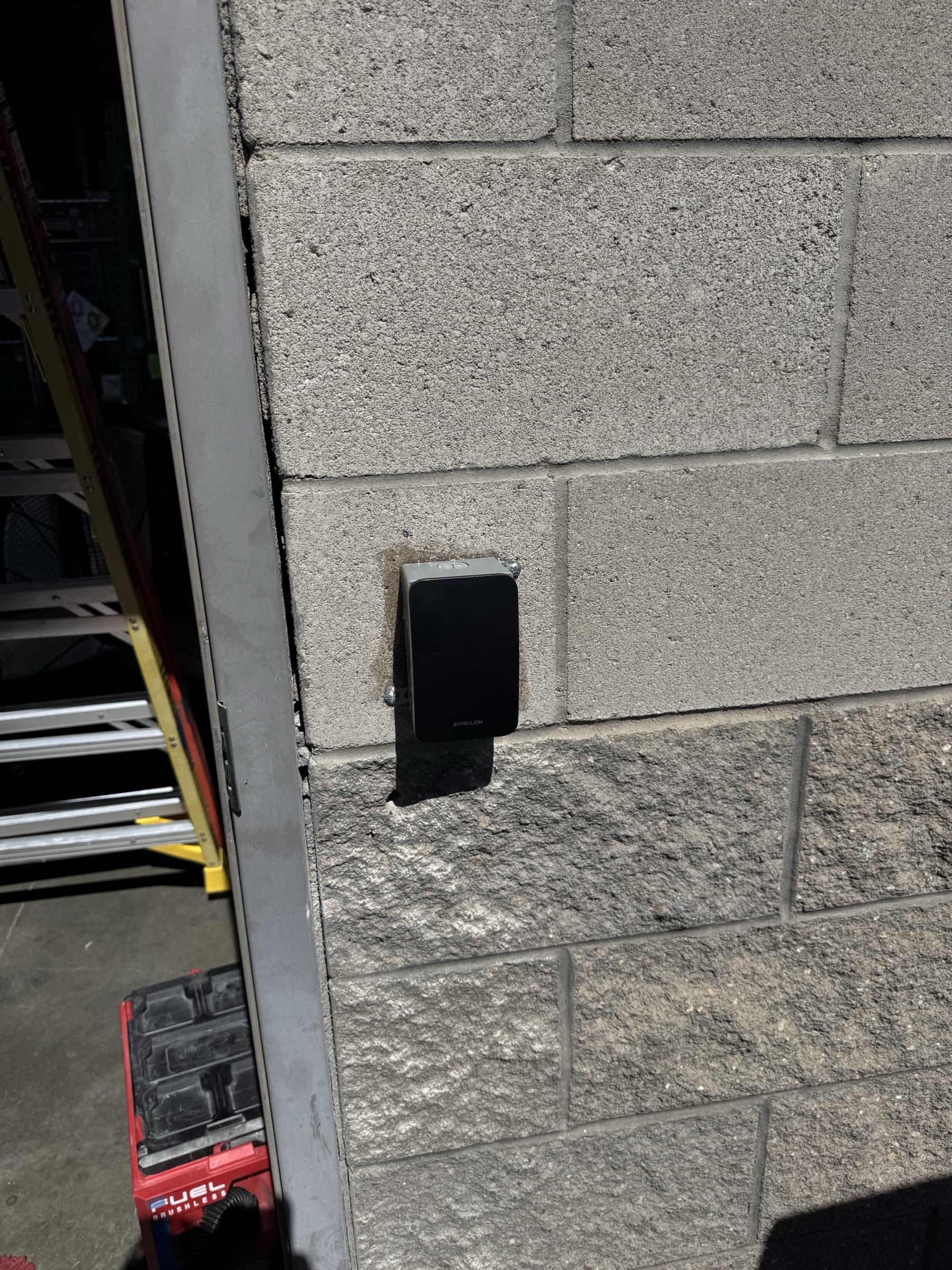
The short answer: map the doors, people, and schedules first
For a new installation or an existing-system upgrade, use this checklist to prepare for our commercial access control walkthrough and quote.
Begin with three questions: Which openings need control? Who needs access? When should that access apply?
Equipment choices come later. Use this checklist to organize the job without putting access codes, employee records, or sensitive facility details in a general document.
Build a door and gate schedule
Give every opening a name that the whole team will understand, such as “north employee entrance” or “yard vehicle gate.” This schedule is a discovery tool. It does not determine code, life-safety, engineering, or compliance requirements.
The areas each opening connects
The groups that currently use it
The present lock, key, credential, or control method
Ordinary operating hours
Known power, cabling, or network information
Whether cameras or other systems interact with it
Current phase, future phase, or out of scope
Define access groups without listing people
Start with roles rather than names: employees, managers, contractors, vendors, approved visitors, or another facility-defined group.
Keep personal data out of the planning worksheet. Names, credential numbers, access codes, and employee records belong only in an approved operational system.
If guests, patients, or contractors move through the building, visitor management belongs on the same checklist.
Areas each group may need to enter
Ordinary time windows
Temporary or after-hours exceptions
Who approves access
Who requests additions or removals
Who will administer the system after implementation
Capture schedules and exceptions
Ordinary hours are only the starting point. Record holidays, shift changes, temporary projects, vendor windows, and separate rules for different buildings or zones.
If the facility expects monitoring or outside support, identify the exact expectation and responsible party. Optional monitoring-ready or live-video support may be available through a UL-listed central-station relationship, but it is not a universal promise of monitoring, 24/7 response, emergency response, or a particular response time.
Inventory the systems around each opening
An access-control decision may involve more than the reader or lock. Mark uncertain items for site assessment. Do not assume compatibility from a model number or a general web checklist.
Door or gate hardware
Structured-cabling pathways
Network connections and equipment locations
Cameras or video-verification components
Other commercial security components
Current administrative tools and documentation
Many facilities working through this checklist end up comparing traditional panels against cloud-based access control.
Describe the events the team needs to understand
Write down the questions the facility expects the system to support, such as reviewing credential activity for defined areas or managing approved access changes.
Describe the required function without promising that technology will prevent every incident, satisfy an unstated obligation, or assure a particular result.
Assign decision and administration owners
The same person may own several decisions. What matters is that each responsibility is clear before the scope is finalized.
| Decision | Suggested owner to name |
|---|---|
| Openings and facility boundaries | Facilities or operations |
| Network and connectivity constraints | Authorized IT/network contact |
| User groups and schedules | Operations or designated administrator |
| Purchasing and phase approval | Buyer or project sponsor |
| Final scope acceptance | Named client approver |
Define phases and acceptance
For each phase, list the openings included, dependencies to inspect, documentation expected, people responsible for review, and how the team will confirm that the agreed scope was completed.
Treat cameras, cabling, fiber, network design, and security consulting as separate scope components when they are relevant. Do not assume they are automatically included with access control.
First-discussion checklist
Bezemer Industries provides commercial access control, structured cabling, fiber optic cabling, commercial security systems, CCTV and video-verification solutions, network design and Wi-Fi, and security consulting and site assessment. It serves commercial facilities in Clovis, Fresno, and the Central Valley. Residential alarm, home-camera, and smart-home work is outside its service scope.
Door and gate schedule
Role-based access groups
Operating windows and exceptions
Existing hardware and system inventory
Cabling and network dependencies
Current and future phases
Decision and administration owners
Documentation and acceptance expectations