Hours and activity
Opening and closing times, shift changes, cleaning crews, vendors, and authorized after-hours work should inform the account instructions.
UL-listed central station support
A monitored alarm needs a working connection, clear account instructions, and someone who knows the system behind the signals. Bezemer coordinates central station monitoring as your local commercial security contractor.
Local system design, programming, service, and monitoring coordination. Central station monitoring through Bezemer's UL-listed station relationship.
Daily monitored-account tests
You own the equipment you purchase
No lengthy alarm panel lease
From signal to account instructions
An alarm notification on a phone and a monitored commercial alarm account serve different needs. Central station monitoring gives received signals a documented handling process, with contacts and site instructions attached to the account.
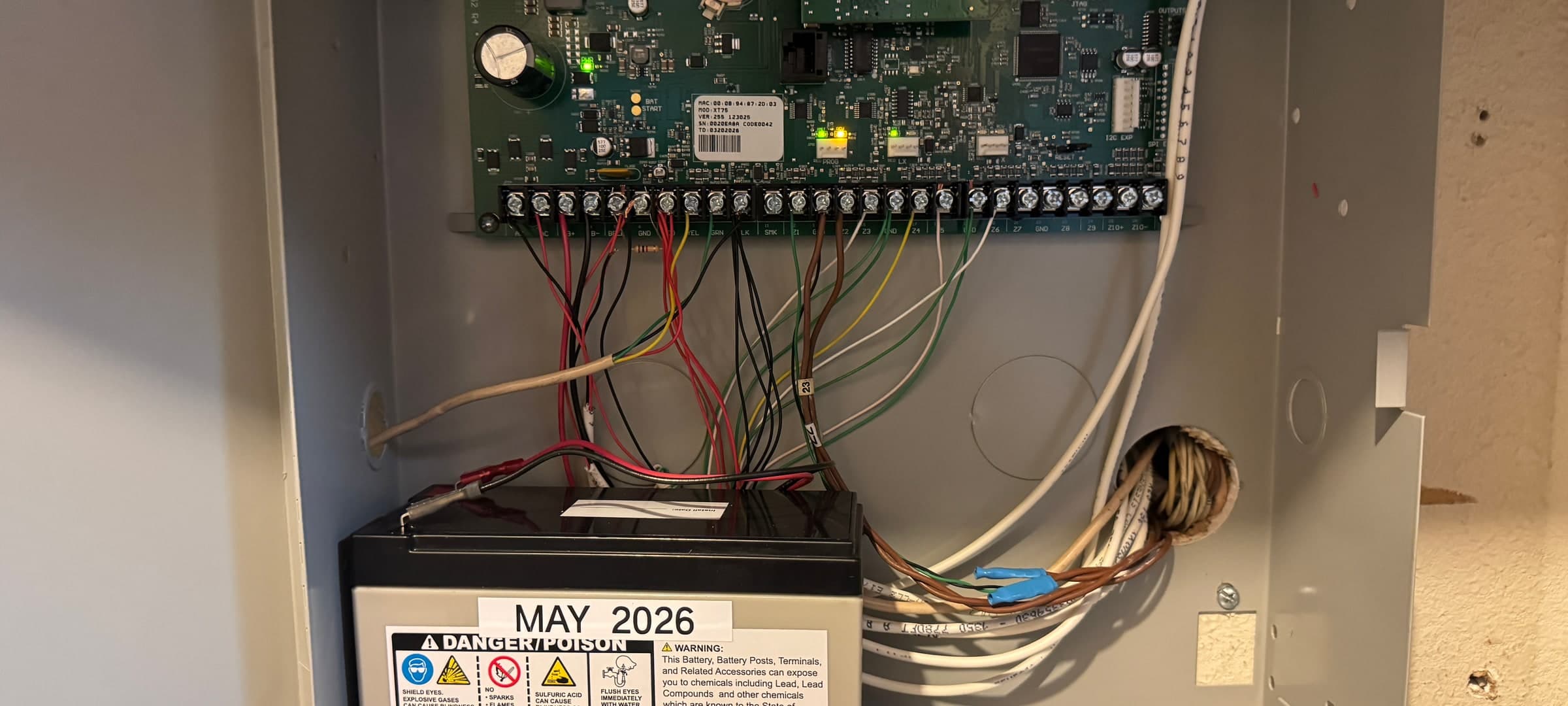
Bezemer provides this service through a UL-listed central station relationship with over 40 years of monitoring experience. We design, install, program, service, and support the system and coordinate the monitoring relationship. The central station receives and handles the signals.
01
Your alarm system detects an event or condition through its configured devices and programming.
02
The system sends a signal over the configured communication path to the central station.
03
The signal is handled according to the account's documented instructions and the type of event received.
04
The appropriate contact or escalation process follows the account configuration. Every signal doesn't call for the same action.
An intrusion alarm, a trouble condition, and a test signal have different meanings. Handling depends on the event and account configuration; monitoring doesn't mean every signal results in dispatch.
Daily account testing
Bezemer's monitored accounts receive daily tests so the monitoring connection is regularly checked. Ean chooses to include this additional oversight even though this level of testing isn't required for Bezemer's monitored accounts.
The purpose is straightforward: don't leave an account sitting for months with everyone assuming the communication path still works. A regular check-in adds another layer of oversight and gives the facility team additional peace of mind.
Daily account testing checks the monitoring connection. It doesn't physically test every sensor, door contact, motion detector, glass-break detector, battery, or siren each day, and it doesn't guarantee detection of every possible failure.
Physical device testing, inspection, and maintenance remain separate work. When planning service, we distinguish the account check from the condition of the equipment throughout the building.
Customer-owned infrastructure
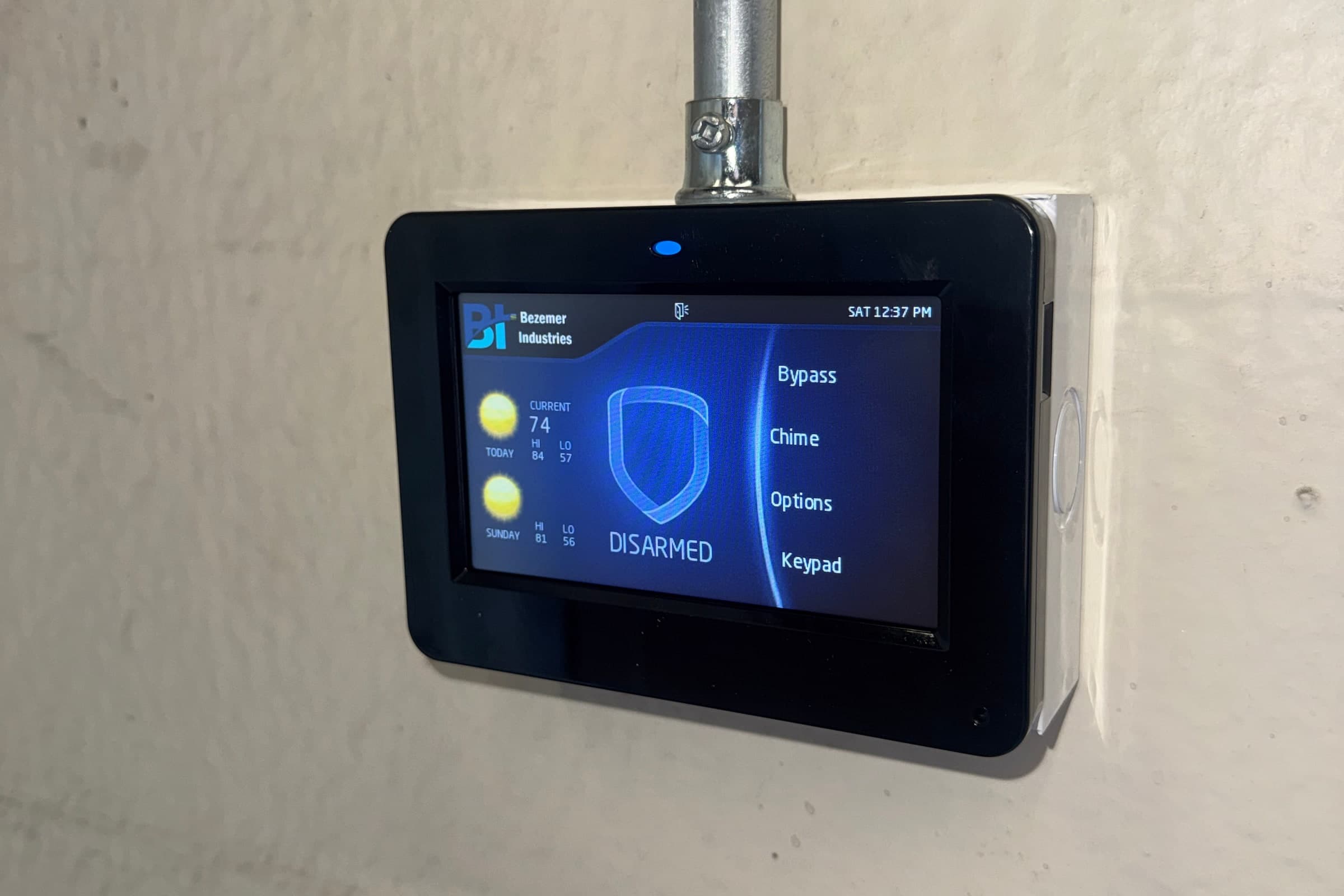
You own the security equipment you purchase from Bezemer. That includes the alarm panel and any cameras or access hardware you buy for the project. You're investing in the facility's infrastructure, with decisions about upgrades and service based on what the business needs next.
Bezemer doesn't use a long equipment lease simply to put an alarm panel in your building and keep you attached to it. Monitoring and service have their own agreed terms; those relationships don't change ownership of the equipment you purchased.
Ownership doesn't promise that another company can take over every panel or platform. Future options depend on the equipment, communication hardware, programming access, and proposed provider. We keep that distinction clear when reviewing the system.
Local accountability
Bezemer is a smaller, Clovis-based commercial security and low-voltage contractor. The relationship extends beyond a monitoring account number: we know the infrastructure we install and service, including the wiring, panel programming, and documentation behind it.
When a warehouse expands, a sensor develops a fault, or closing routines change, the work may require a field visit, programming changes, or updated records. You have a local contractor who can connect those needs to the existing system rather than treating each one as a separate subscription question.
The roles stay clear. The central station handles monitoring signals according to the account instructions. Bezemer handles contractor support, system changes, and monitoring coordination. Not every monitoring event is routed directly to Ean.
For hardware installation and intrusion protection, see our commercial security systems service.
Monitoring should fit the facility
An office that closes at five and a warehouse running multiple shifts need different account instructions. The monitoring plan should reflect the people, spaces, and routines actually present, including authorized after-hours activity and who can respond to a call.
Opening and closing times, shift changes, cleaning crews, vendors, and authorized after-hours work should inform the account instructions.
Identify the managers and authorized contacts who can make decisions. Keep the contact order current when employees or responsibilities change.
An office entry, warehouse door, restricted room, or separate building needs a useful name so a received signal has clear facility context.
For yards, gates, or inventory outside the building, perimeter security may address separate detection needs. Employee credentials and entry schedules belong in access control planning. We coordinate those services where appropriate while keeping each system's purpose clear.
Service and maintenance
Commercial systems need ongoing attention. Programming, testing, replacement parts, repairs, additions, and documentation can all be legitimate reasons for a continuing service relationship. Bezemer can provide service and maintenance plans where the facility and system warrant them.
A plan should address actual work: what needs checking, which changes occur regularly, and who is responsible for arranging service. That's separate from renting a panel. Scope and terms should follow the facility's needs rather than an unnecessarily long equipment lease.
Existing alarm systems
Already have an alarm? Bezemer can assess the panel, devices, communication path, wiring, programming, and monitoring requirements before recommending whether a takeover, upgrade, repair, or replacement makes sense.
Condition, programming access, equipment support, and compatibility determine what can reasonably remain. We don't assume every panel can be taken over. For broader decisions involving several systems, security consulting helps organize the assessment before hardware is selected.
Commercial contractor credentials
UL-listed central station support is provided through Bezemer's monitoring relationship.
Commercial buyer FAQs
A central station receives signals from a monitored alarm system and handles them according to the account's documented instructions. Bezemer provides monitoring through a UL-listed central station relationship with over 40 years of monitoring experience. Bezemer designs, installs, programs, services, and coordinates the customer's system; the central station provides the monitoring. The listing applies to the central station, and doesn't mean Bezemer operates that station or that every signal results in dispatch.
Yes. Bezemer supports commercial burglar alarm monitoring for businesses in Fresno, Clovis, and the Central Valley through its central station relationship. The starting point is a facility review: the panel, communication path, account instructions, operating hours, and responsible contacts all need to fit the business. Offices, shops, warehouses, and multi-building properties can have different monitoring needs, so the account should follow the facility's operations rather than a generic subscription package.
Bezemer's monitored accounts receive daily tests to regularly check the monitoring connection. This is an additional oversight practice Bezemer chooses to provide, rather than waiting months while everyone assumes the communication path is working. An account test isn't a daily physical test of every door contact, motion detector, glass-break detector, battery, or siren. It also doesn't guarantee detection of every possible fault; device inspection and physical system testing remain separate service work.
You own the security equipment you purchase from Bezemer, including the alarm panel and any cameras or access hardware you buy as part of the project. Bezemer doesn't use a lengthy panel lease as the way to keep you in the relationship. Monitoring and service still have their own agreed scope and terms. Equipment ownership doesn't establish universal compatibility with other providers: a future takeover depends on the specific panel, programming access, communication equipment, platform, and proposed service.
Yes. Bezemer can review the existing panel, devices, wiring, programming, communication path, and monitoring requirements before recommending a takeover, repair, upgrade, or replacement. Useful equipment may be able to remain, but that decision requires a review of condition, access, compatibility, and support. Bring the panel make and model and a high-level description of the issue to the first conversation. Passwords, alarm codes, and sensitive facility credentials should be exchanged through an agreed secure method.
Handling depends on the signal and the account configuration. The central station follows the documented contacts, site instructions, and escalation procedure for that account. An intrusion alarm, a trouble condition, and a test signal serve different purposes and shouldn't be treated as interchangeable. Dispatch isn't automatic for every signal. During setup, Bezemer helps coordinate who should be contacted and how the account should handle events; the facility needs to keep those contacts and instructions current as personnel or operations change.
Bezemer can provide service and maintenance plans where the facility and system warrant an ongoing arrangement. The work may involve troubleshooting, programming changes, device testing, documentation, replacement parts, additions, or repairs. The plan should address an actual operational need, with the work and responsibilities agreed for that site. Pricing, labor, visits, and response arrangements depend on the proposed scope; equipment ownership is separate from the decision to purchase monitoring or ongoing maintenance.
These services can be coordinated where the equipment and scope support it, but they have distinct jobs. Alarm monitoring handles signals and account instructions. CCTV provides camera coverage and recording; remote video monitoring adds video review and event verification. Access control manages authorized entry, credentials, doors, gates, and schedules. Bezemer can review the dependencies and responsibilities across those systems without assuming every panel, camera, or controller supports every integration.
Connected services
Alarm panels, intrusion devices, installation, and upgrades.
View service
Camera coverage, recording, and usable footage.
View service
Camera-based event review, verification, and escalation.
View service
Doors, gates, credentials, and controlled-entry schedules.
View service
Outdoor detection and security planning at property boundaries.
View service
Assessment and scope planning before selecting systems.
View service
Review all commercial services, or see local project context for Fresno and Clovis. Our Central Coast retail intrusion project shows completed commercial alarm installation work; its scope is distinct from the ongoing monitoring practices described here.
Commercial site assessment
Request a commercial site assessment in Fresno, Clovis, or the Central Valley. Bezemer will review the facility, existing equipment, monitoring requirements, operating routines, and service needs before recommending the appropriate setup.
We'll review your facility location, service need, and timing, then contact you to discuss the scope and arrange the appropriate next step. Sending this request doesn't book an appointment.
Doors, gates, yards, docks, offices, racks, camera views, access points, and existing equipment.
Cabling, panels, cameras, network rooms, Wi-Fi, power, labeling, and expansion limits.
Who needs access, what needs visibility, where response time matters, and what has to stay protected.
Access windows, active operations, vendor coordination, documentation, and handoff details.
Facility Assessment Request
Share the basics of the site, the system involved, and what needs to be fixed, planned, upgraded, or installed. Bezemer will follow up with the next practical step.